Skinners' Hall, City of London
2025
Winner AJ Retrofit and Reuse Awards 2026
6a architects has completed a landmark project at Skinners’ Hall, the Grade I listed and Scheduled Monument home of one of London’s Great Twelve Livery Companies. The eight‑year transformation represents a growing responsibility for contemporary architecture to reuse, repair, and re-design existing buildings without erasing their multiple pasts.
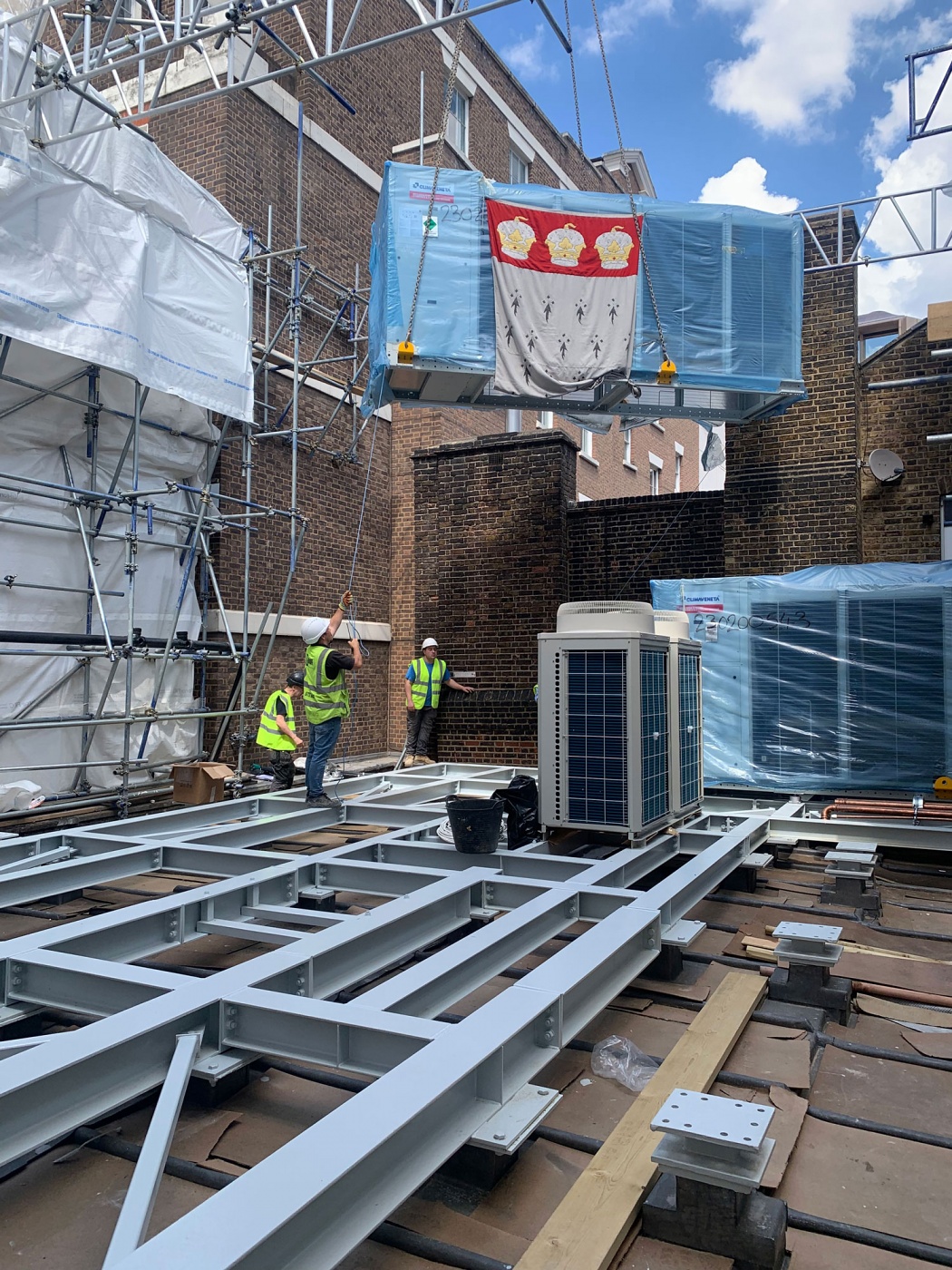
At Skinners’ Hall, decarbonisation and heritage conservation have been conceived as a single architectural process. Failing services have been entirely replaced and the building has been transitioned from gas to a fully electric system powered by air‑source heat pumps. Sensitive thermal upgrades throughout the listed fabric and new mechanical ventilation with heat recovery further reduce operational energy, setting the Hall on a pathway to achieving a dramatic reduction in energy use.
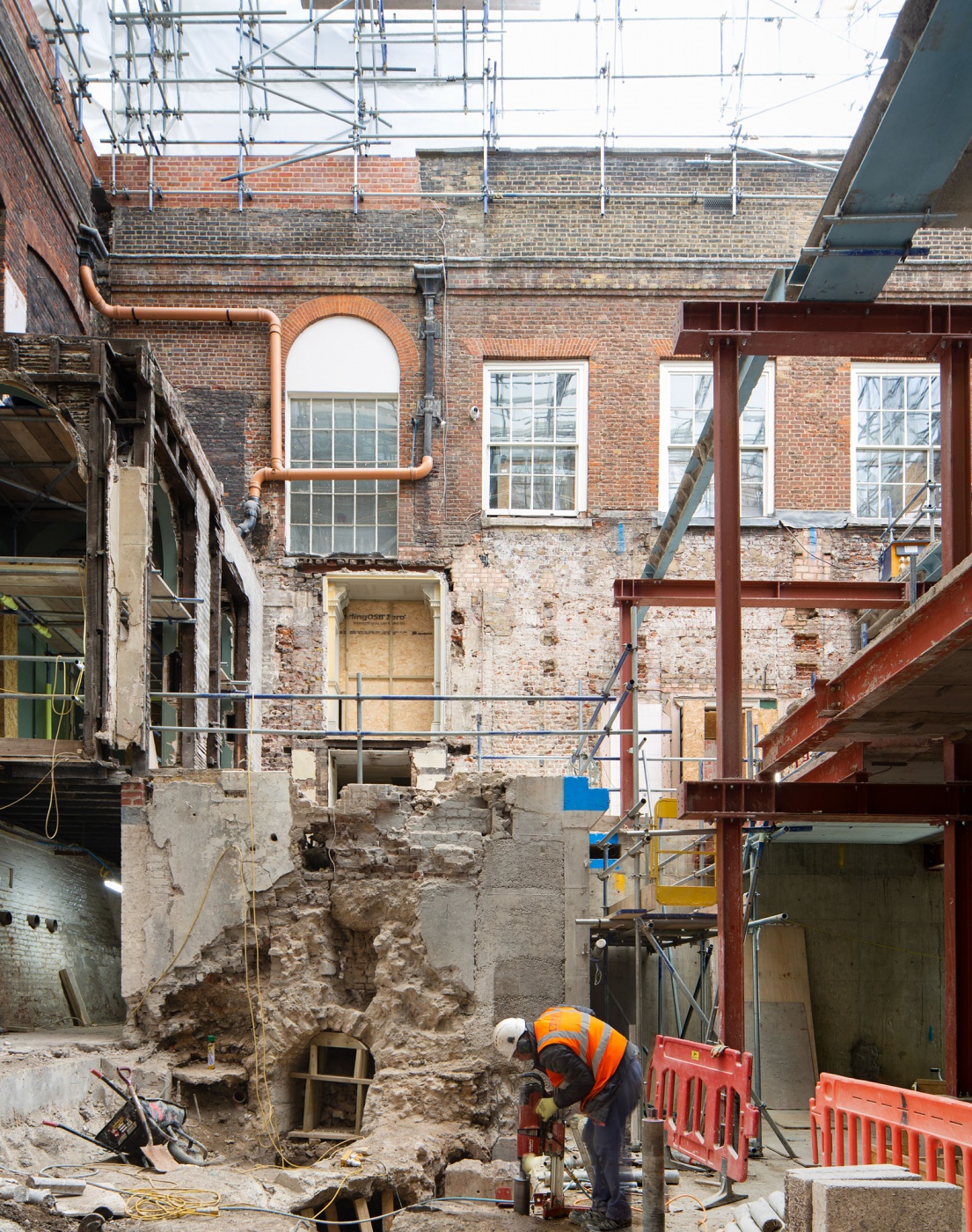
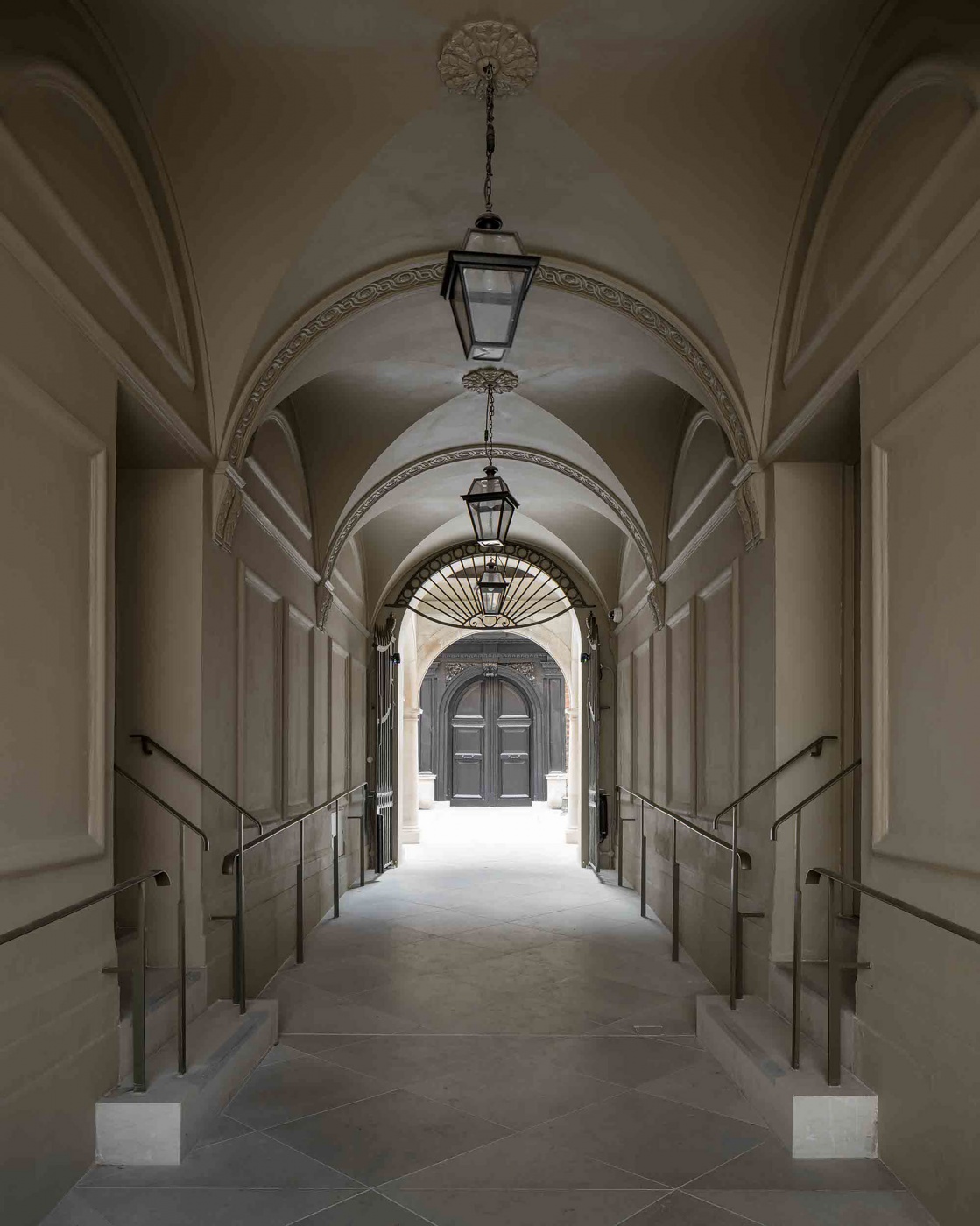
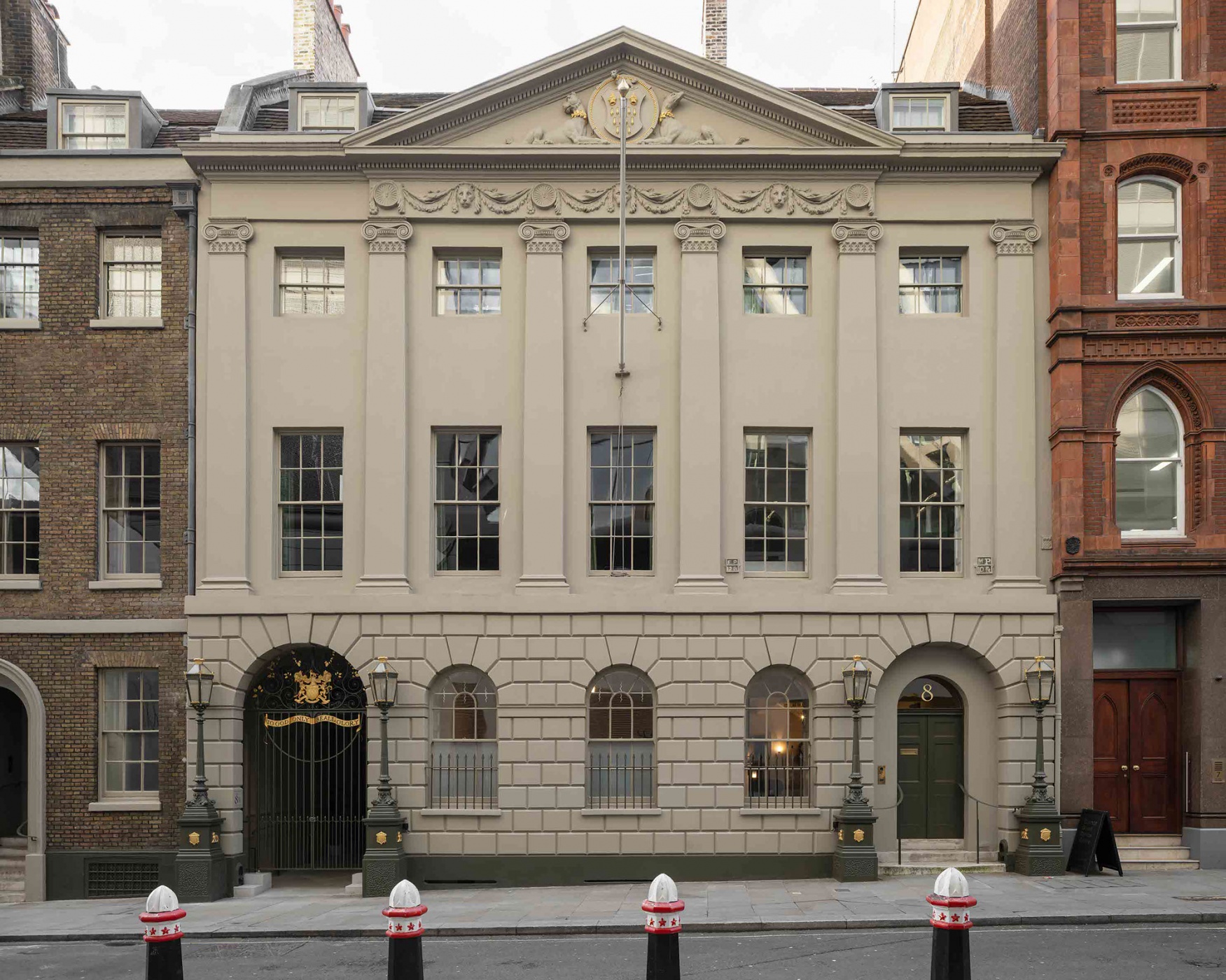
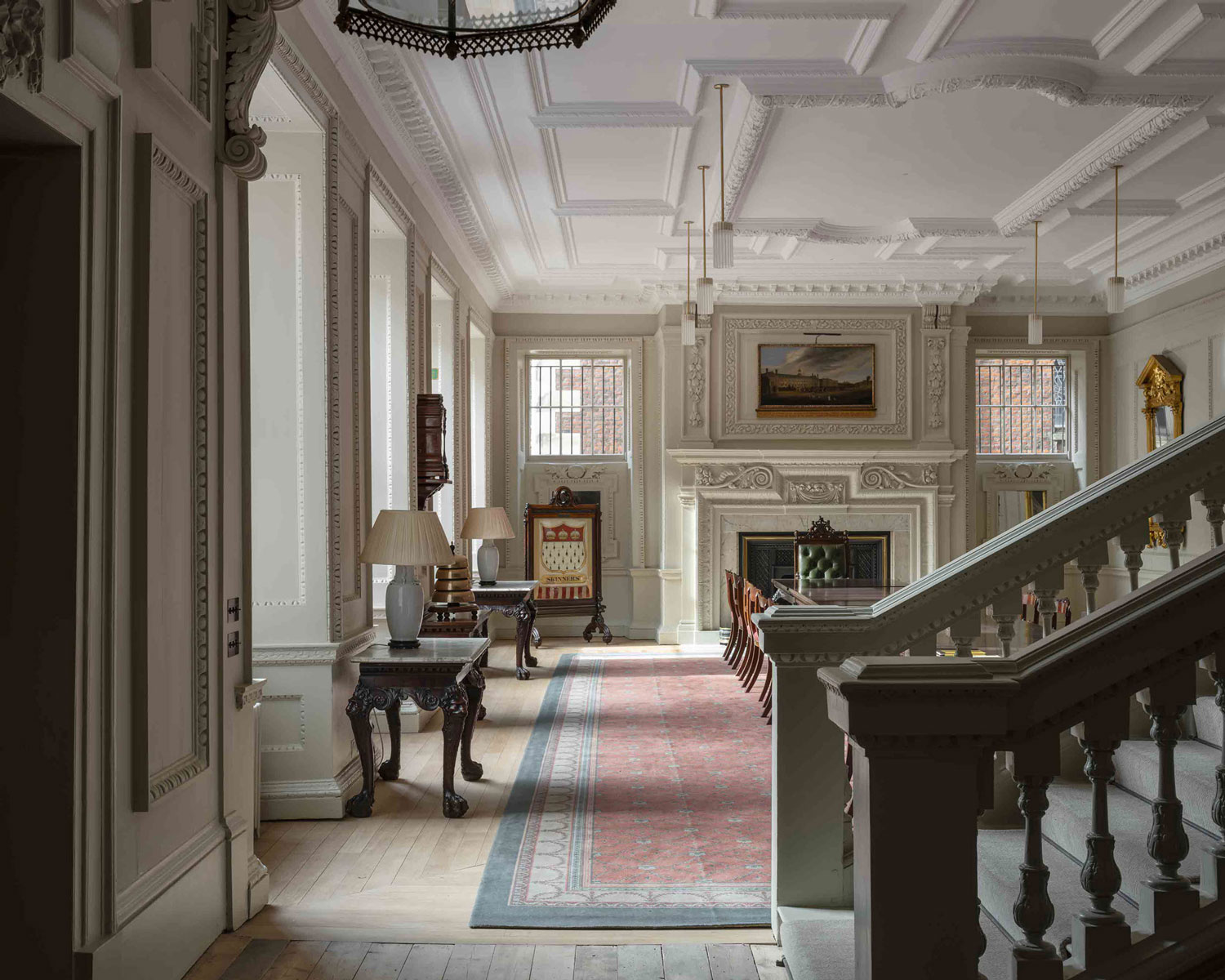
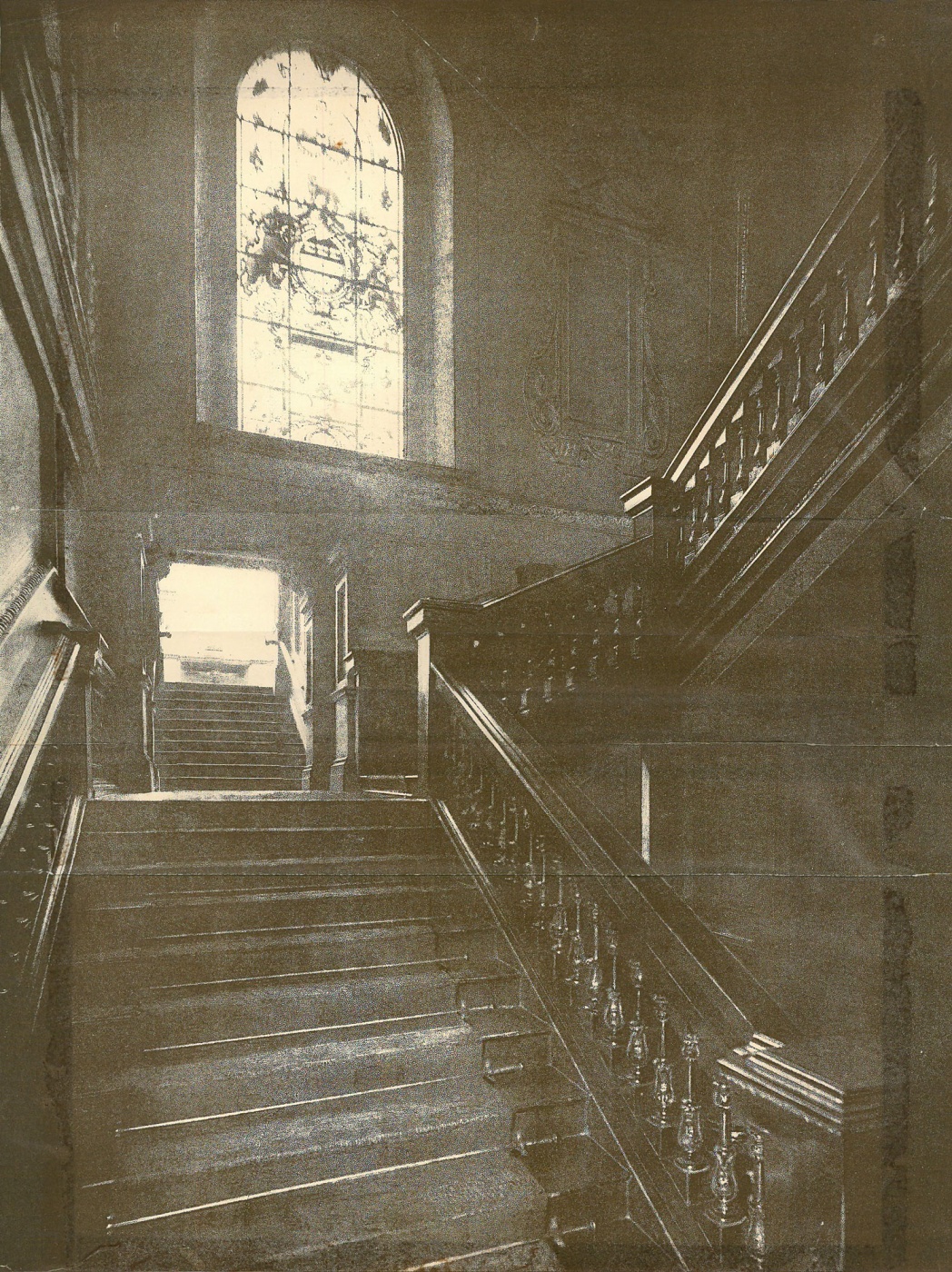
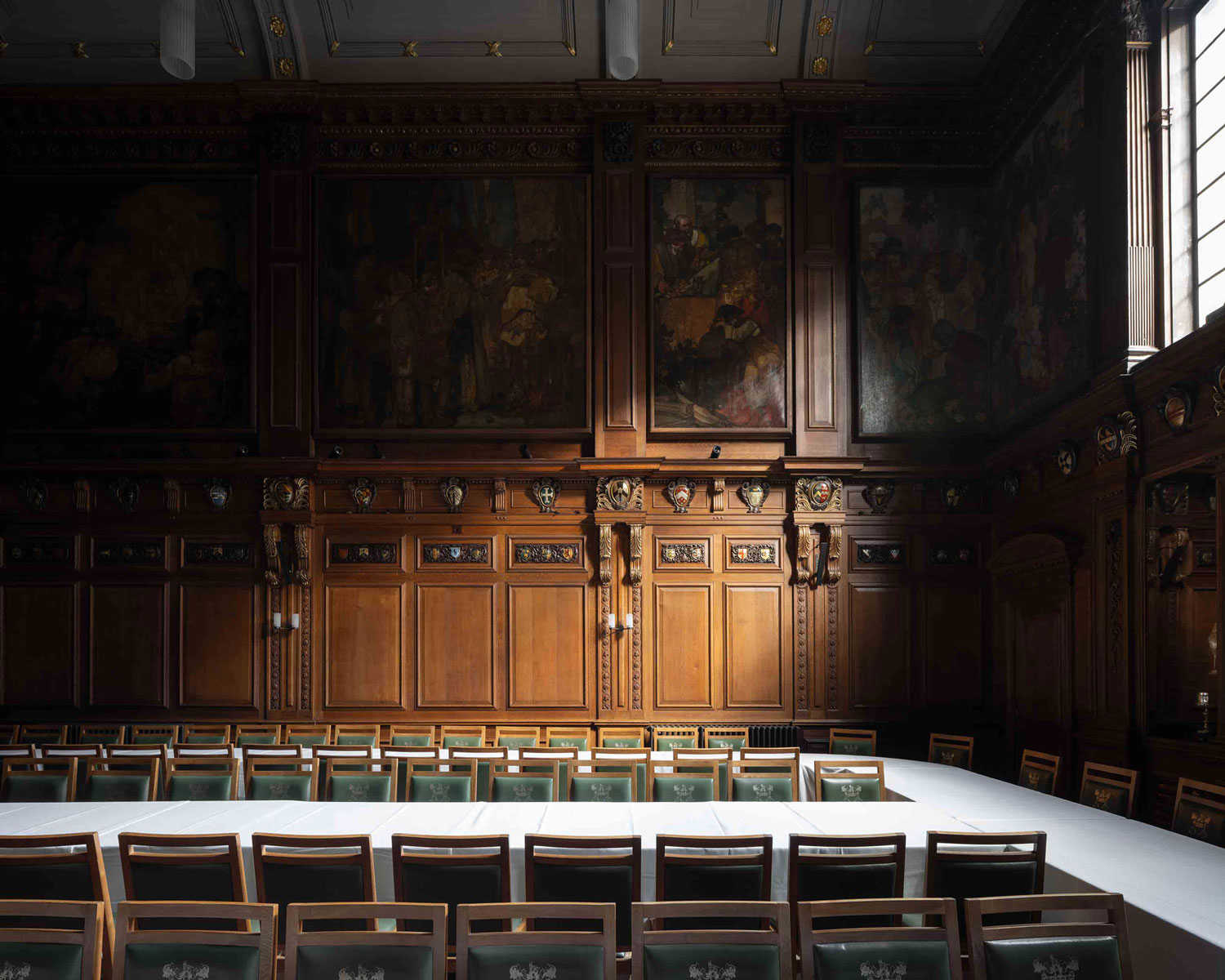
The project reinterprets seven centuries of architecture: seventeenth‑century reconstructions on medieval foundations, Georgian ranges, Victorian Great Hall which continued into the early‑twentieth‑century.
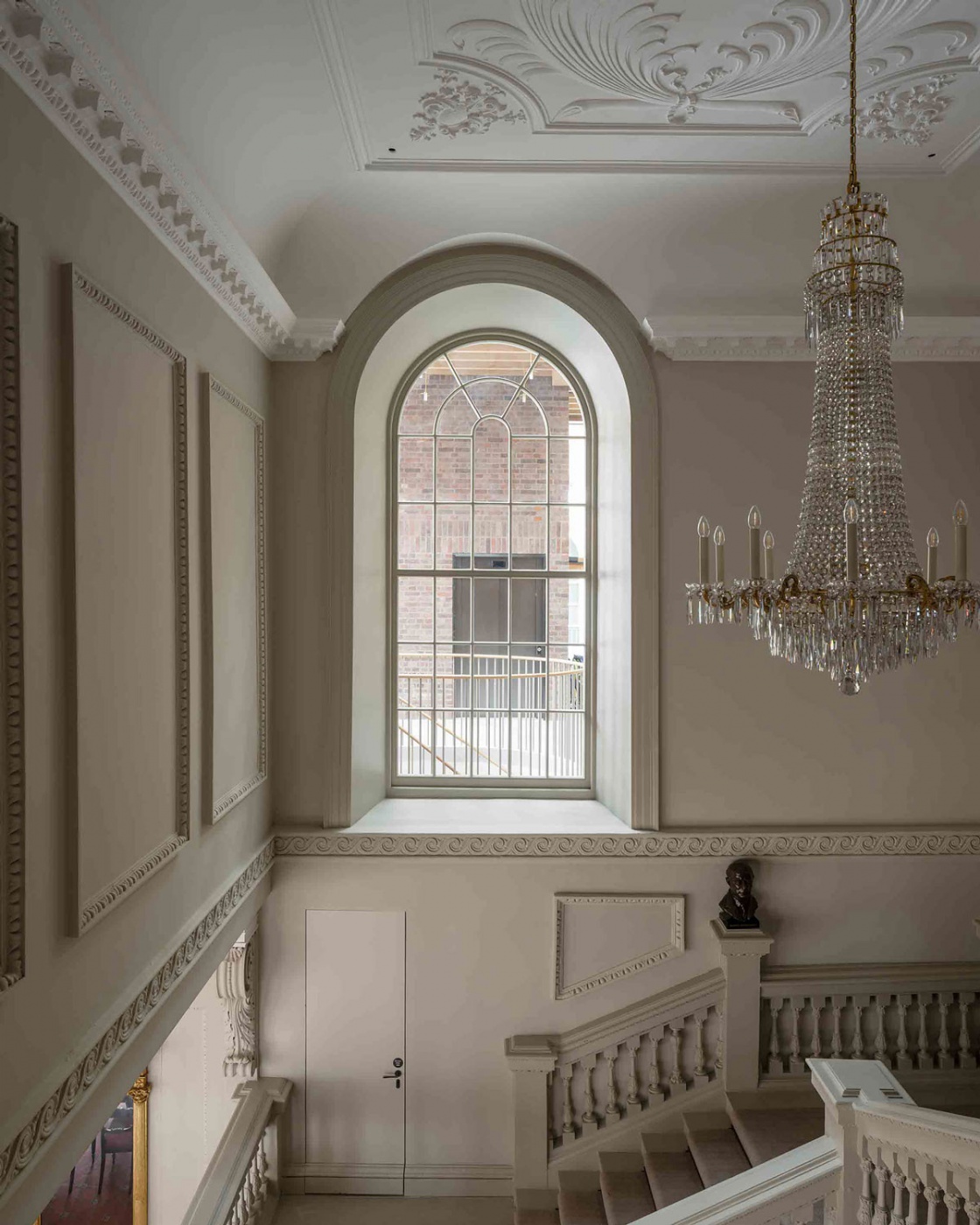
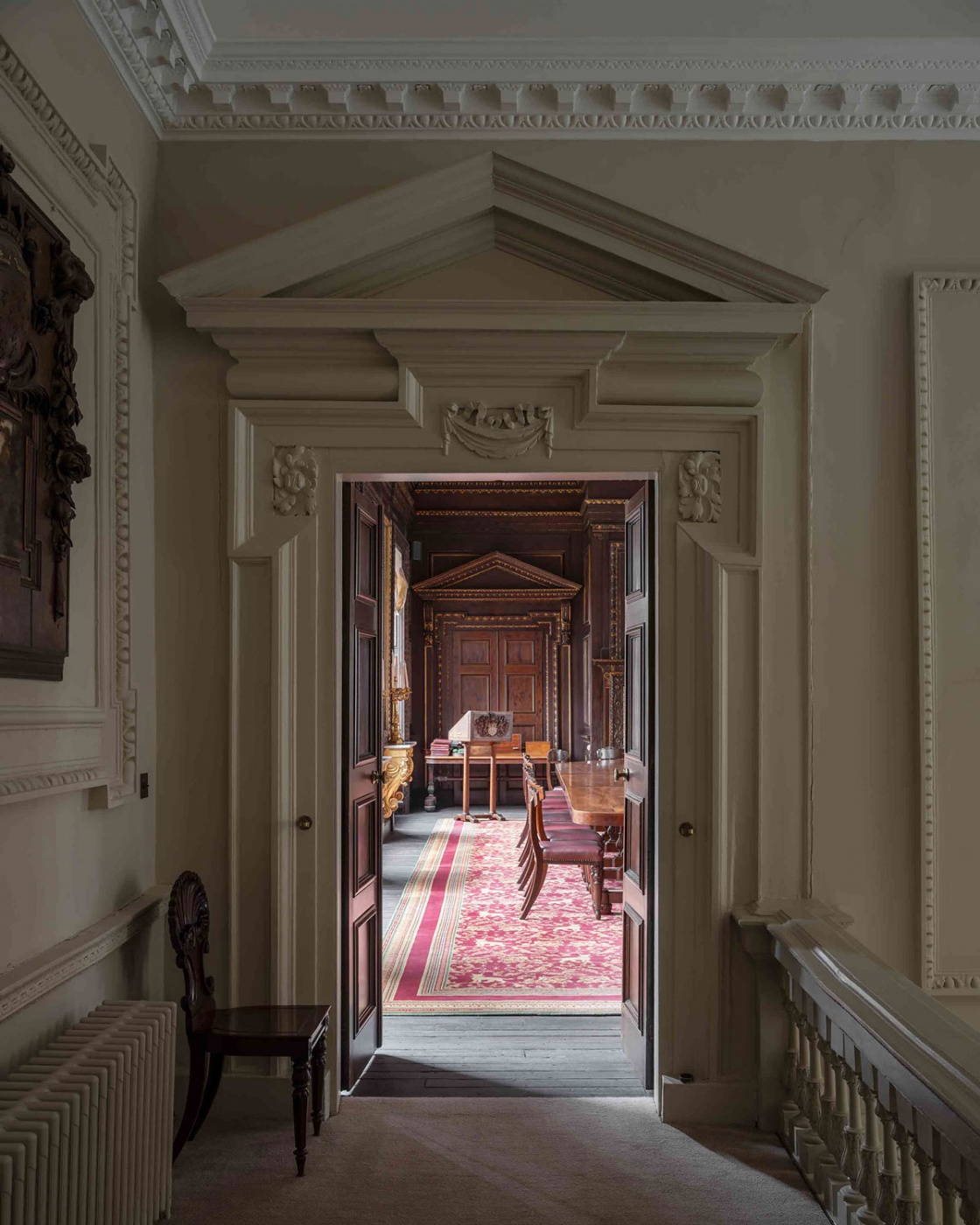
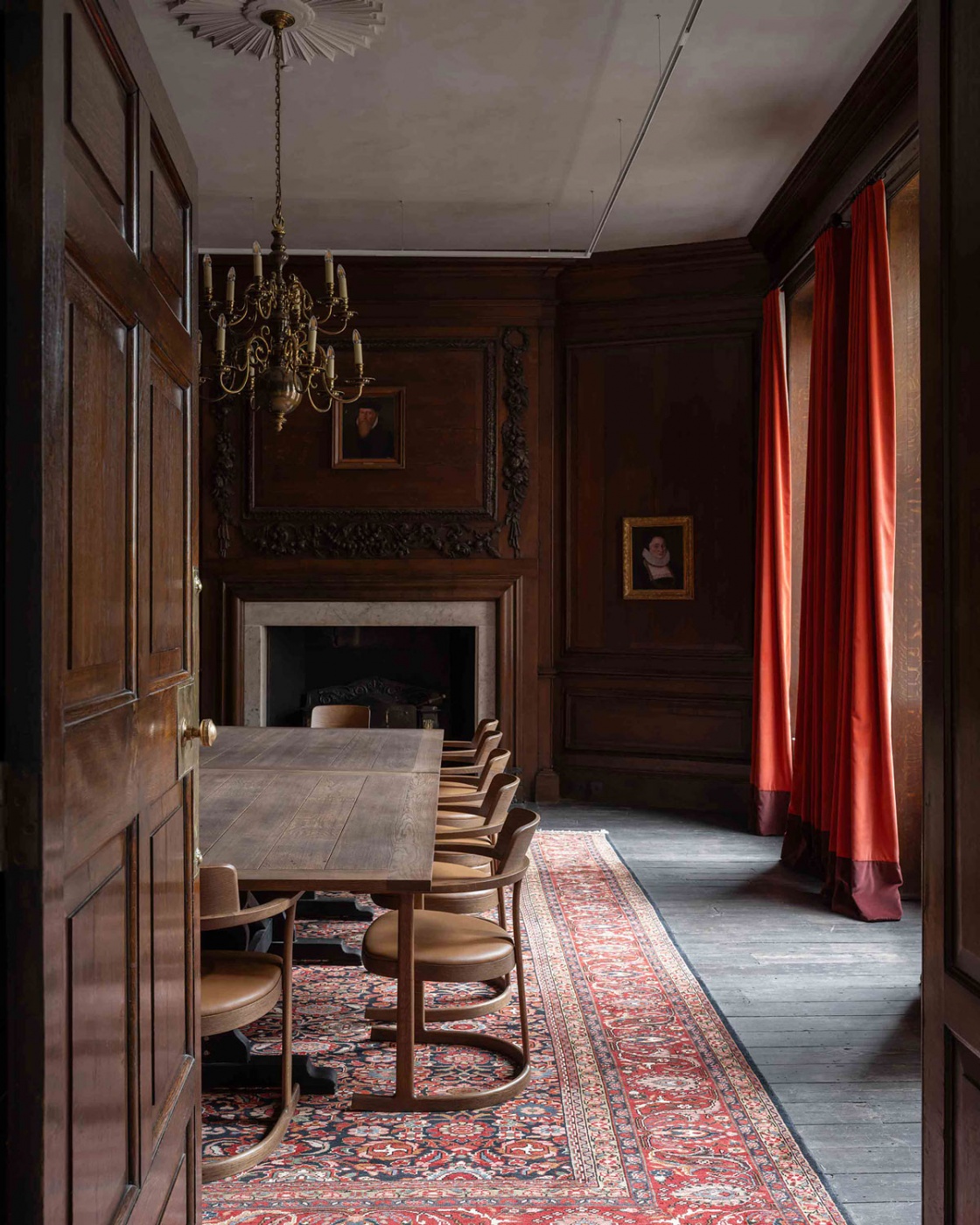
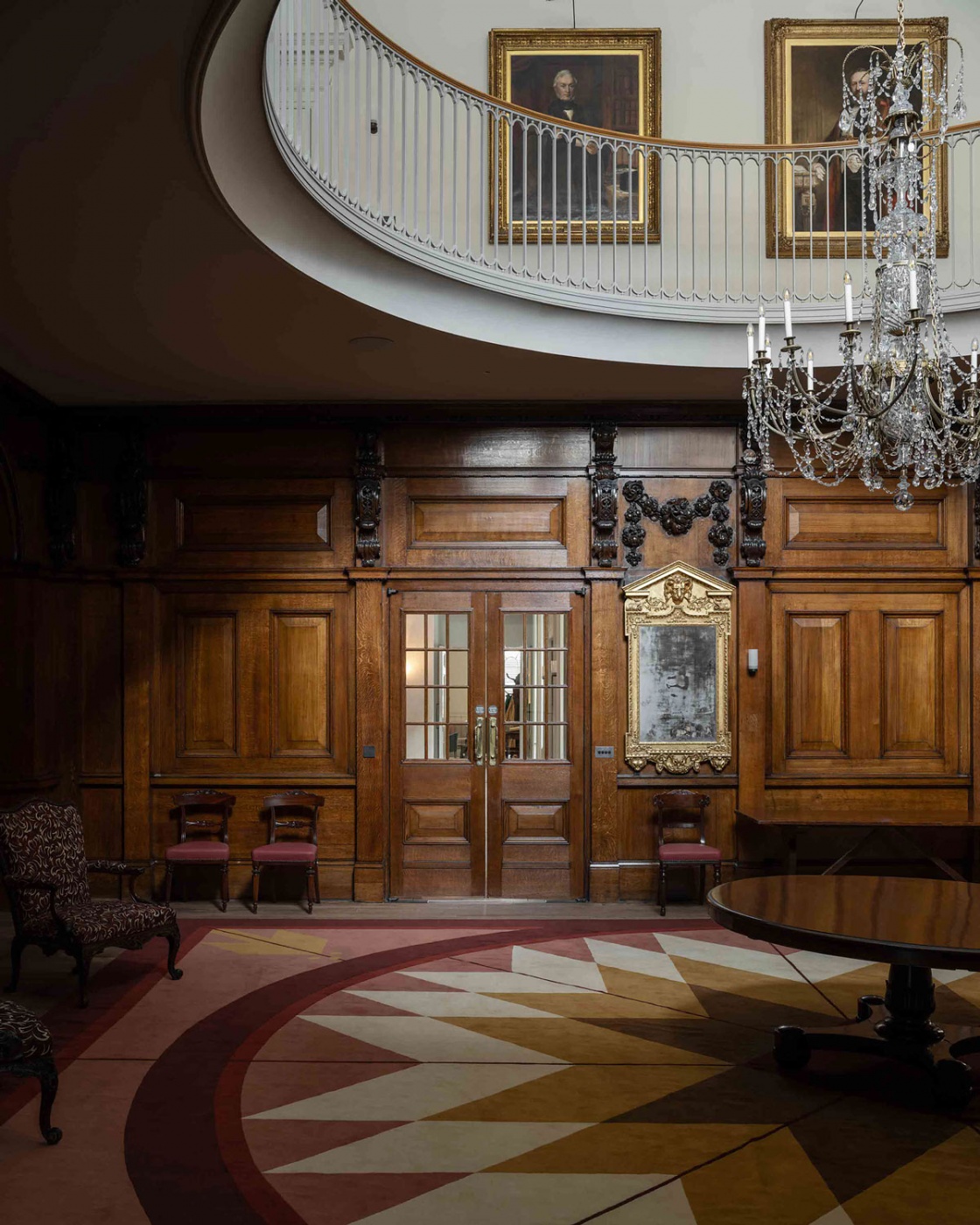
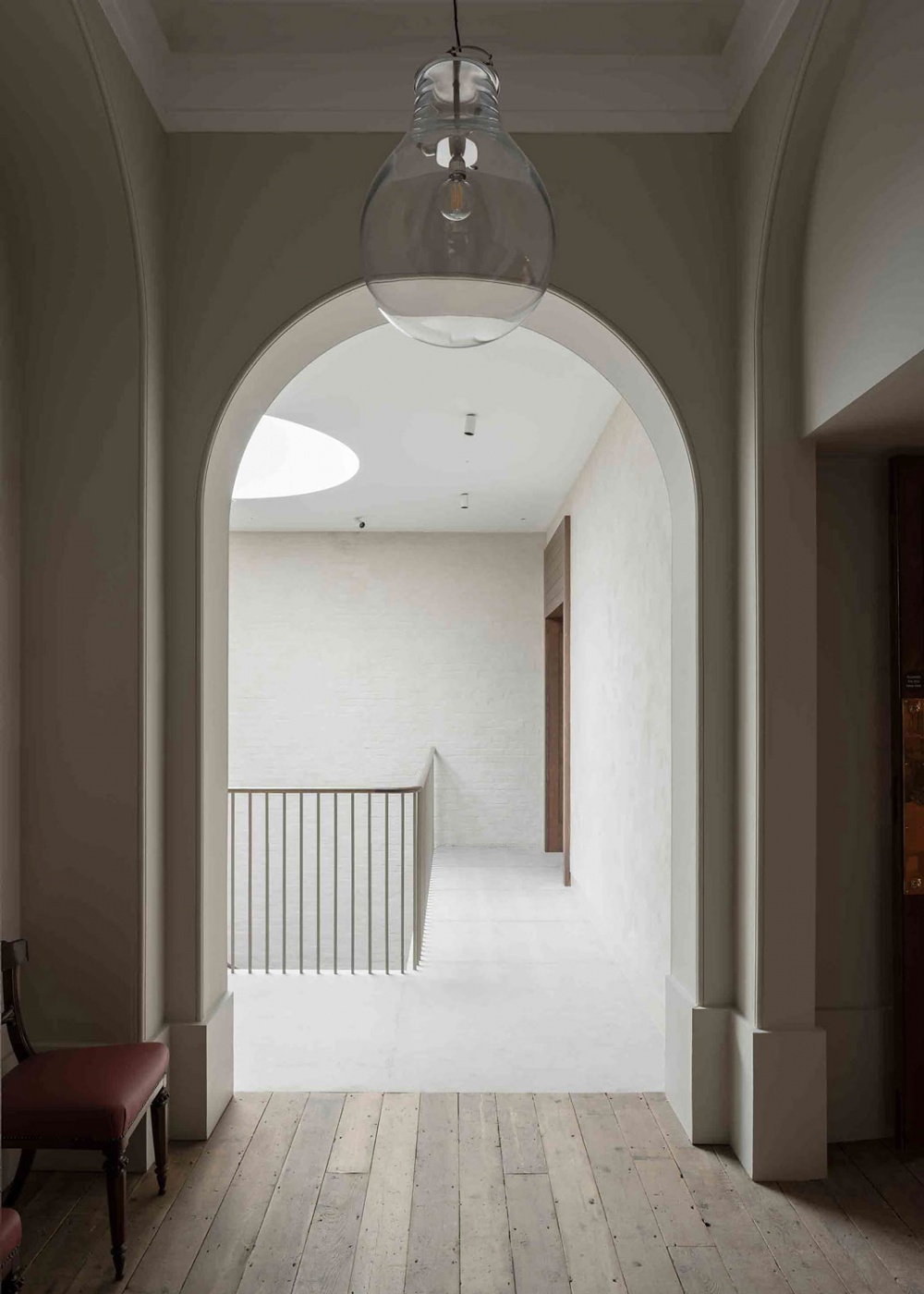
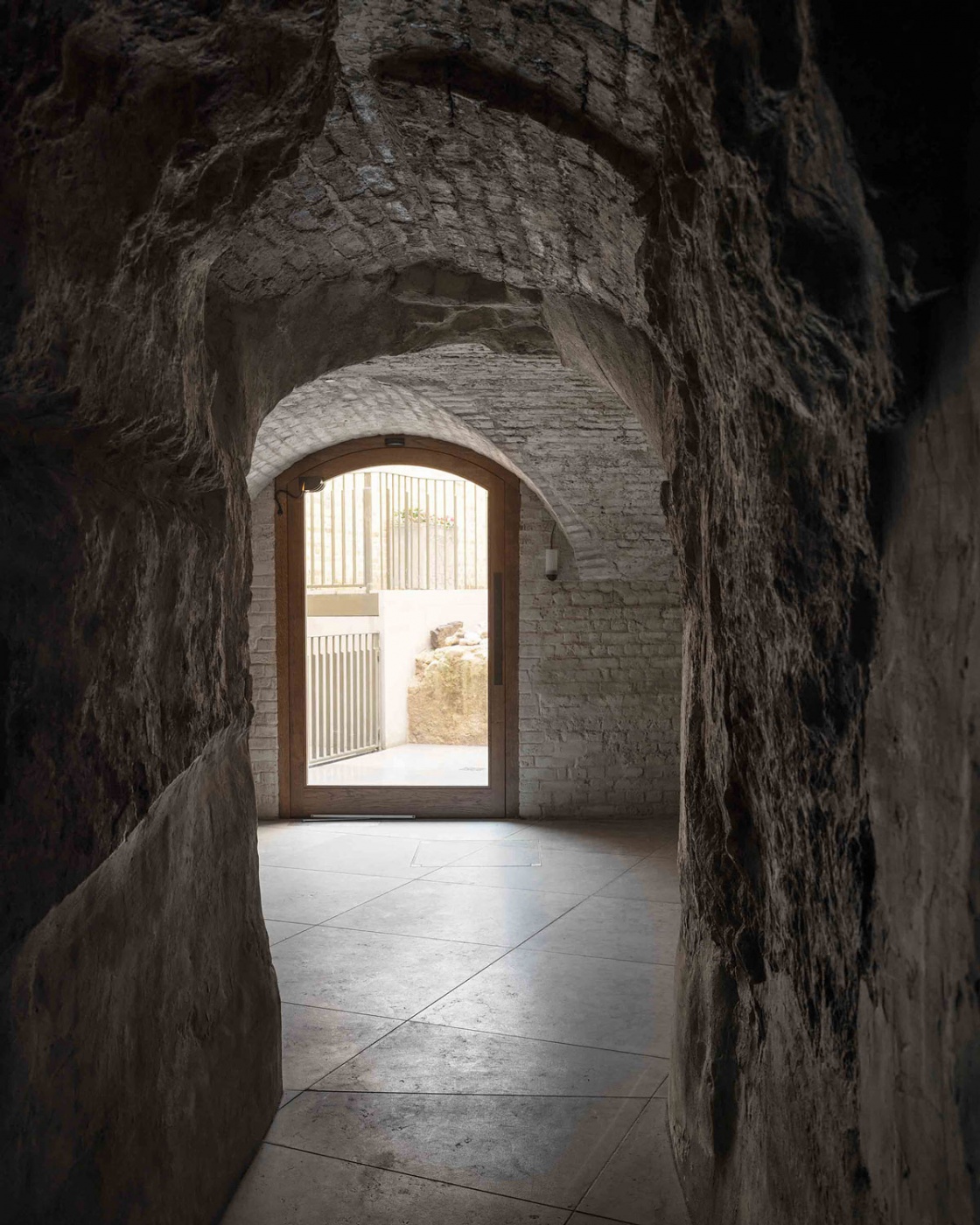
Previously under used and inaccessible vaults are now connected through new stairs, lifts that thread barrier-free routes throughout the buildings. The basement vaults have been transformed into a major new event space, while the historic rooms above have been restored as event spaces, dining rooms, offices, member facilities and apartments.
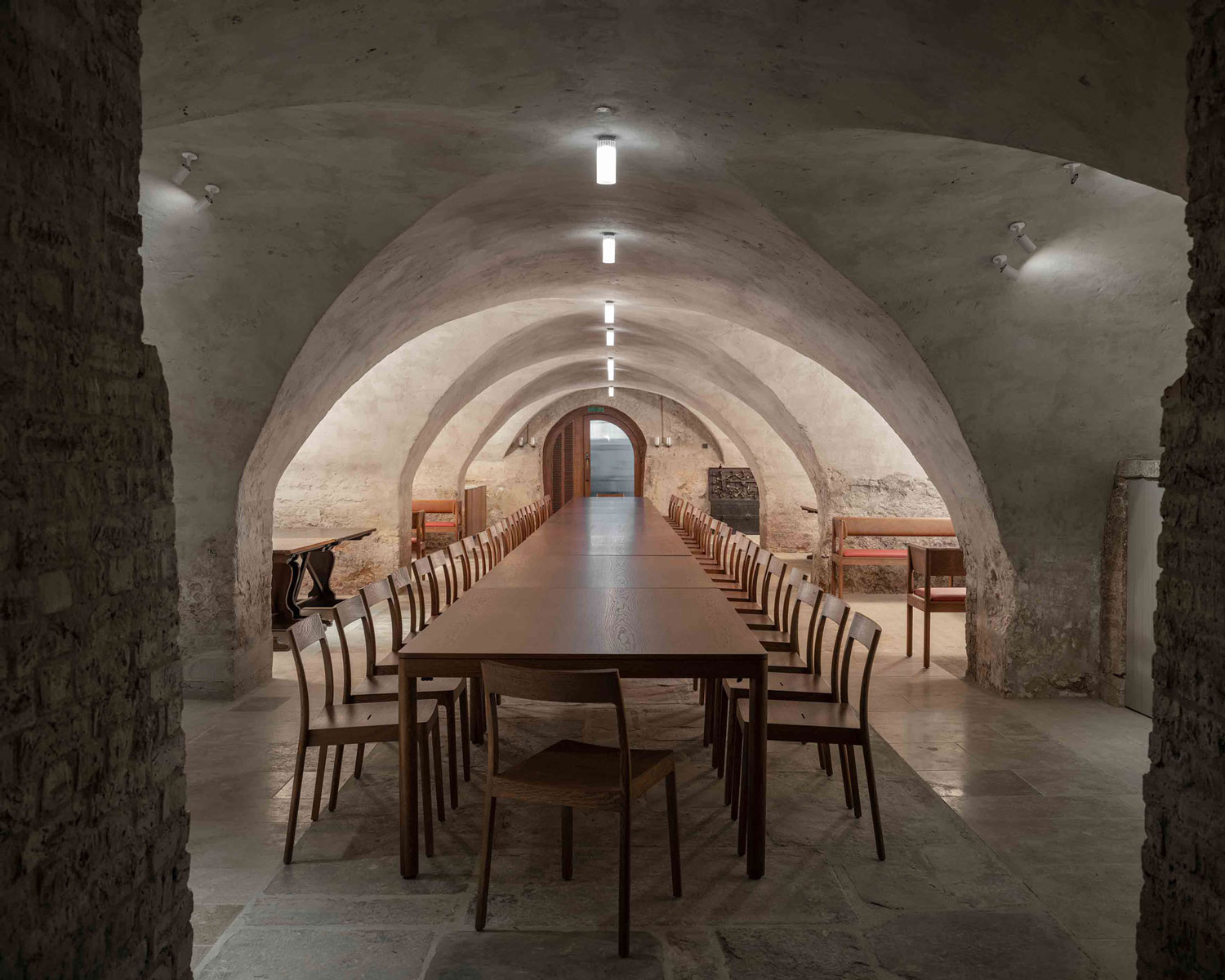
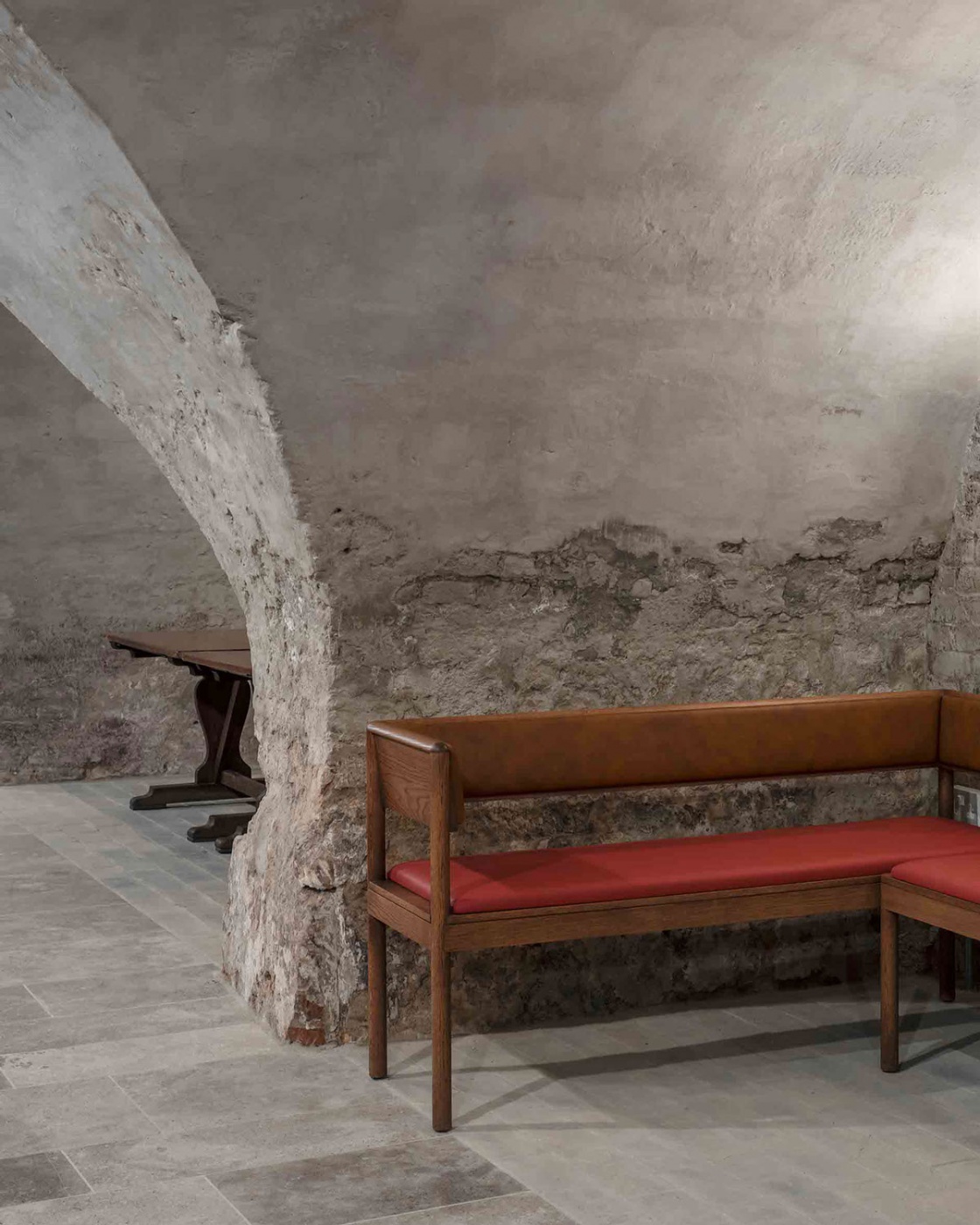
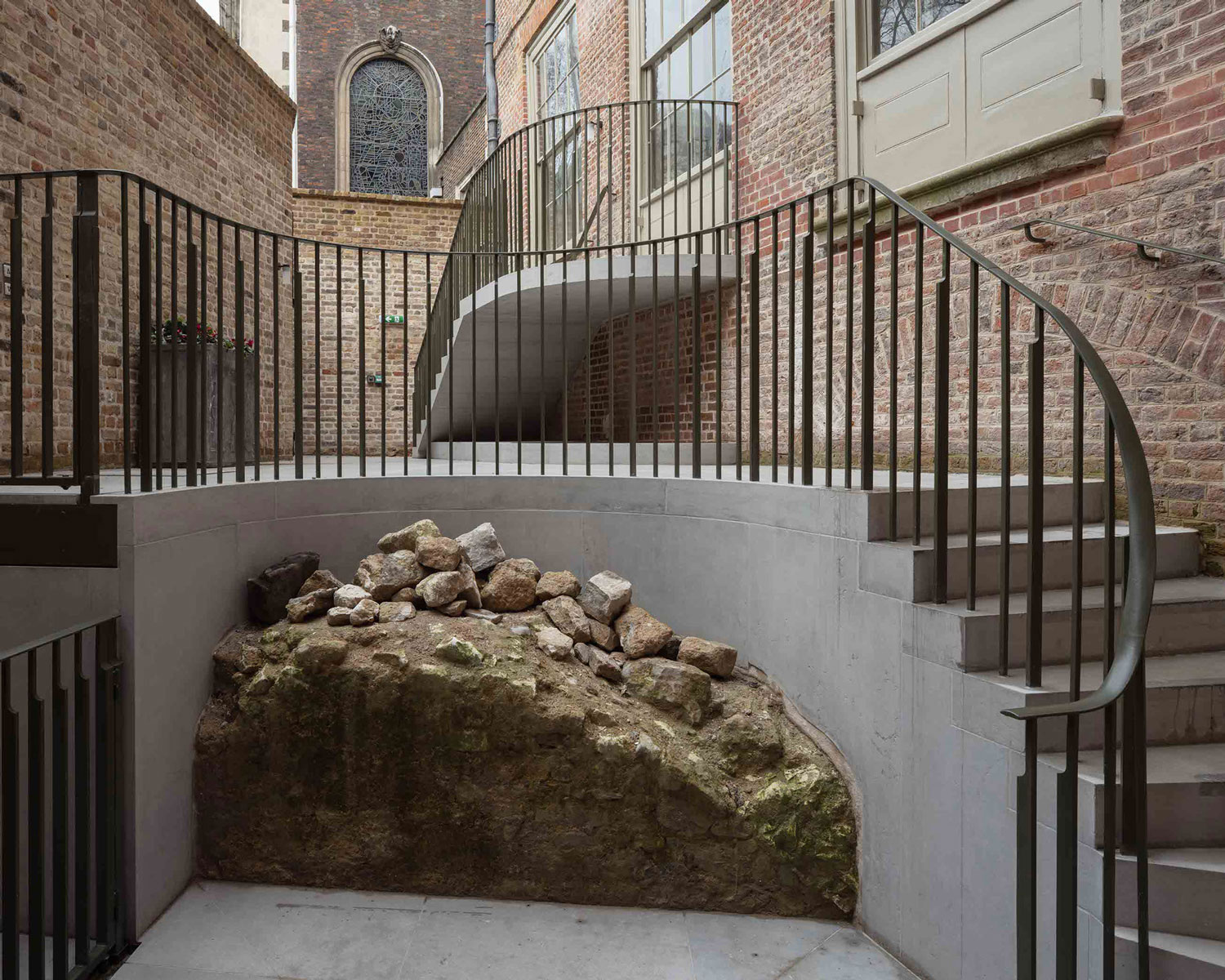
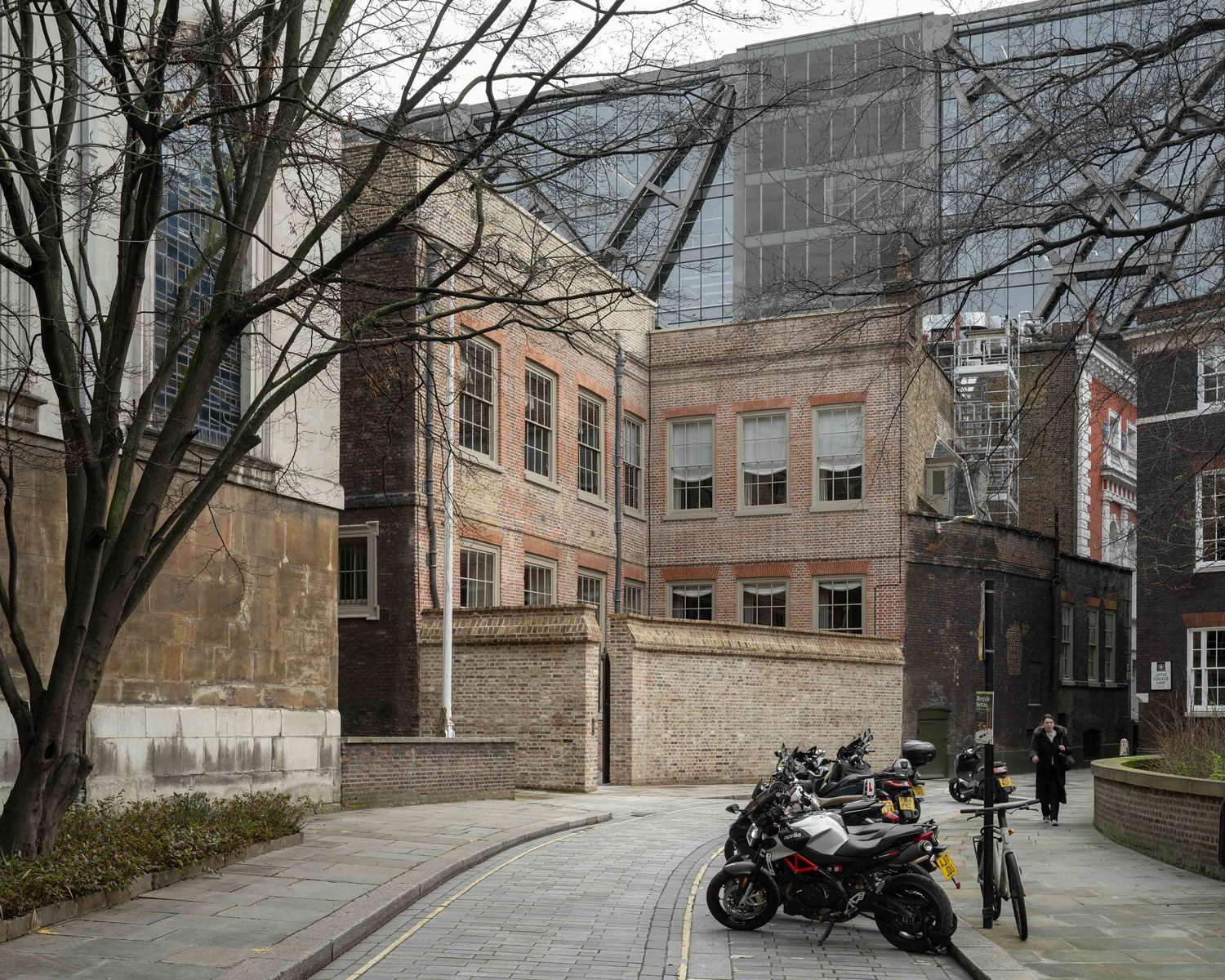
A new rooftop pavilion built from European oak, brick, limestone and stainless steel provides step-free access for the first time to the Court and adds a contemporary architectural layer to the historic ensemble. Its precisely calibrated form responds to existing cornices and architraves overlaid to avoid archaeology below, while subtly echoing the Hall’s longstanding language of brick, timber and metalwork.
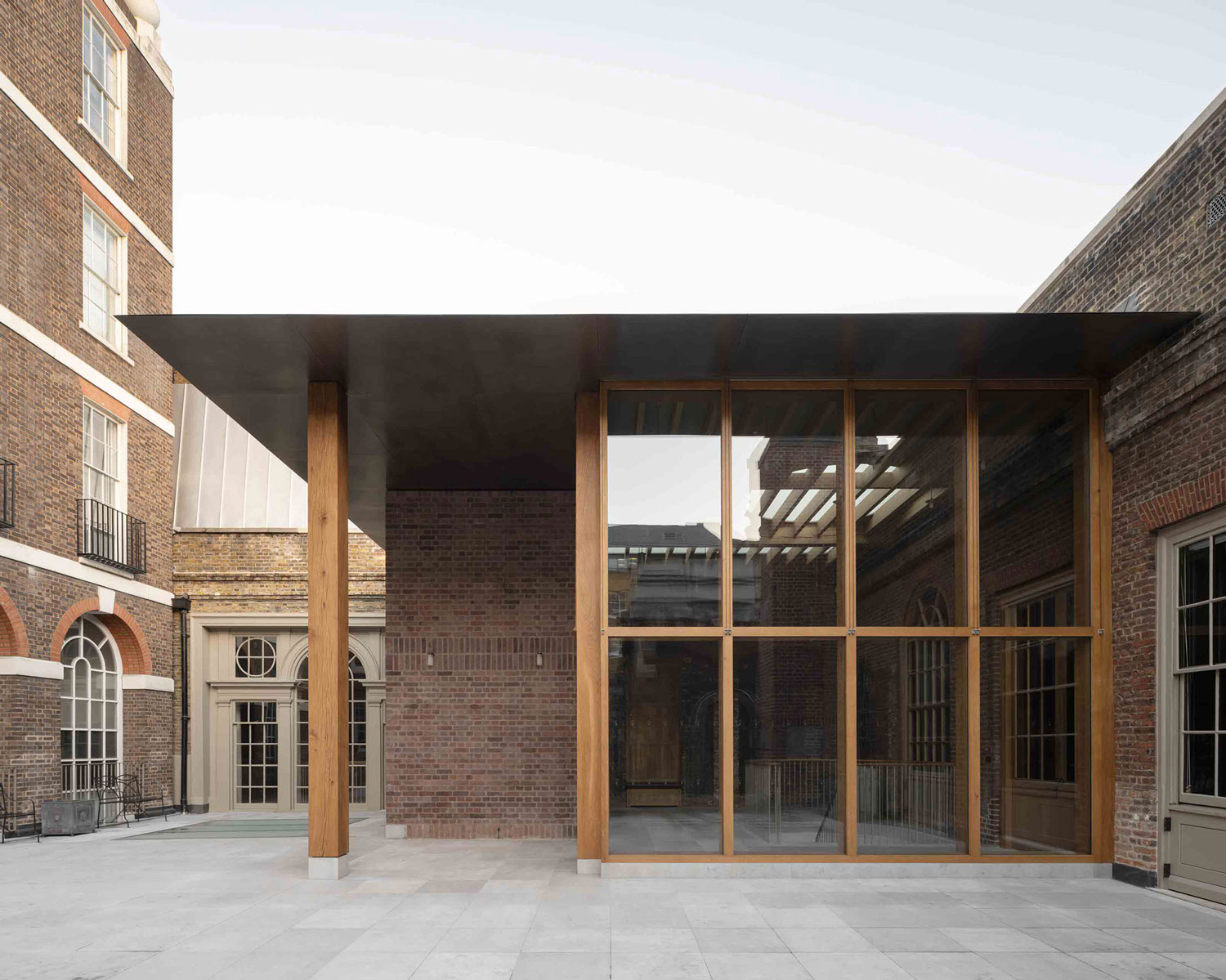
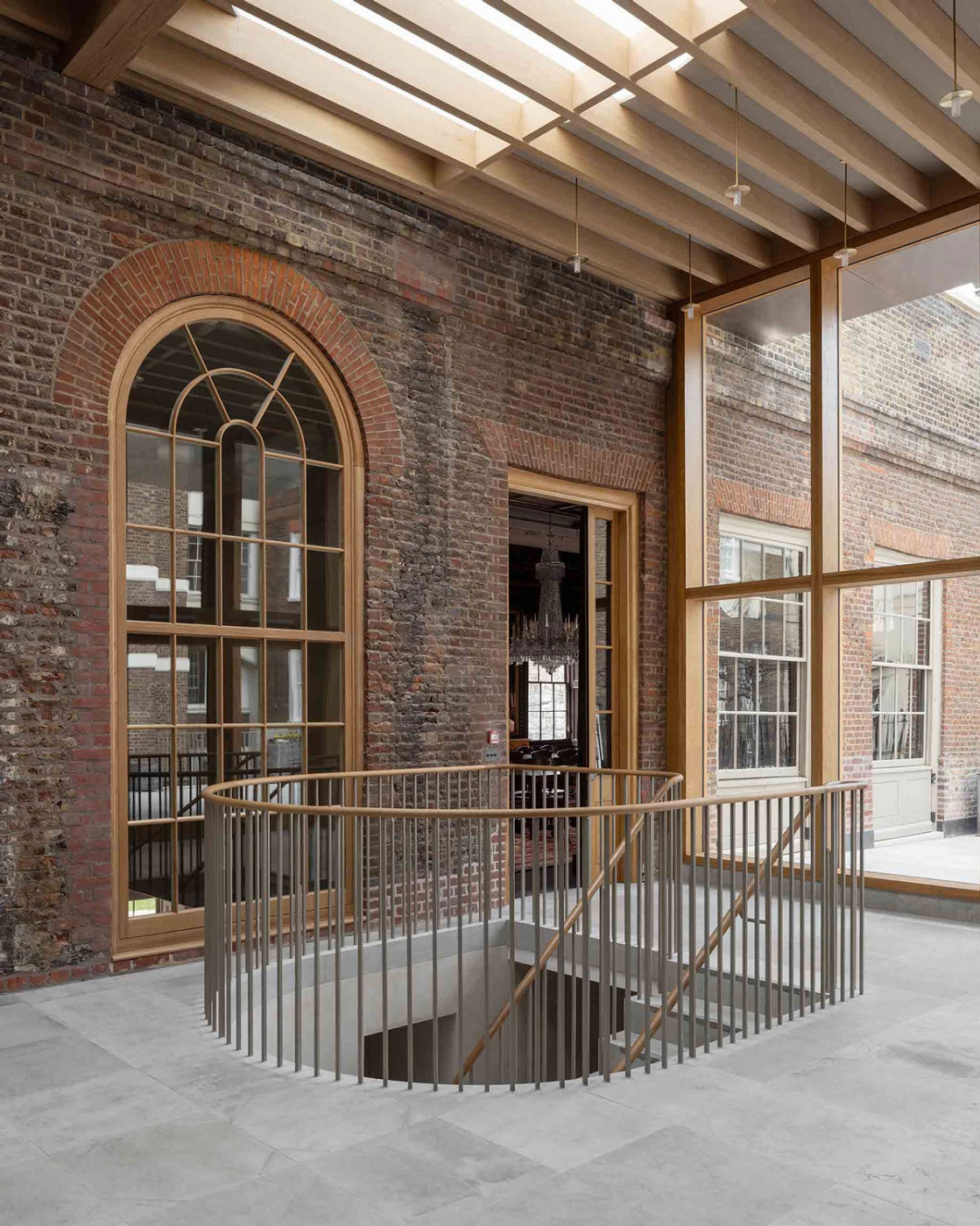
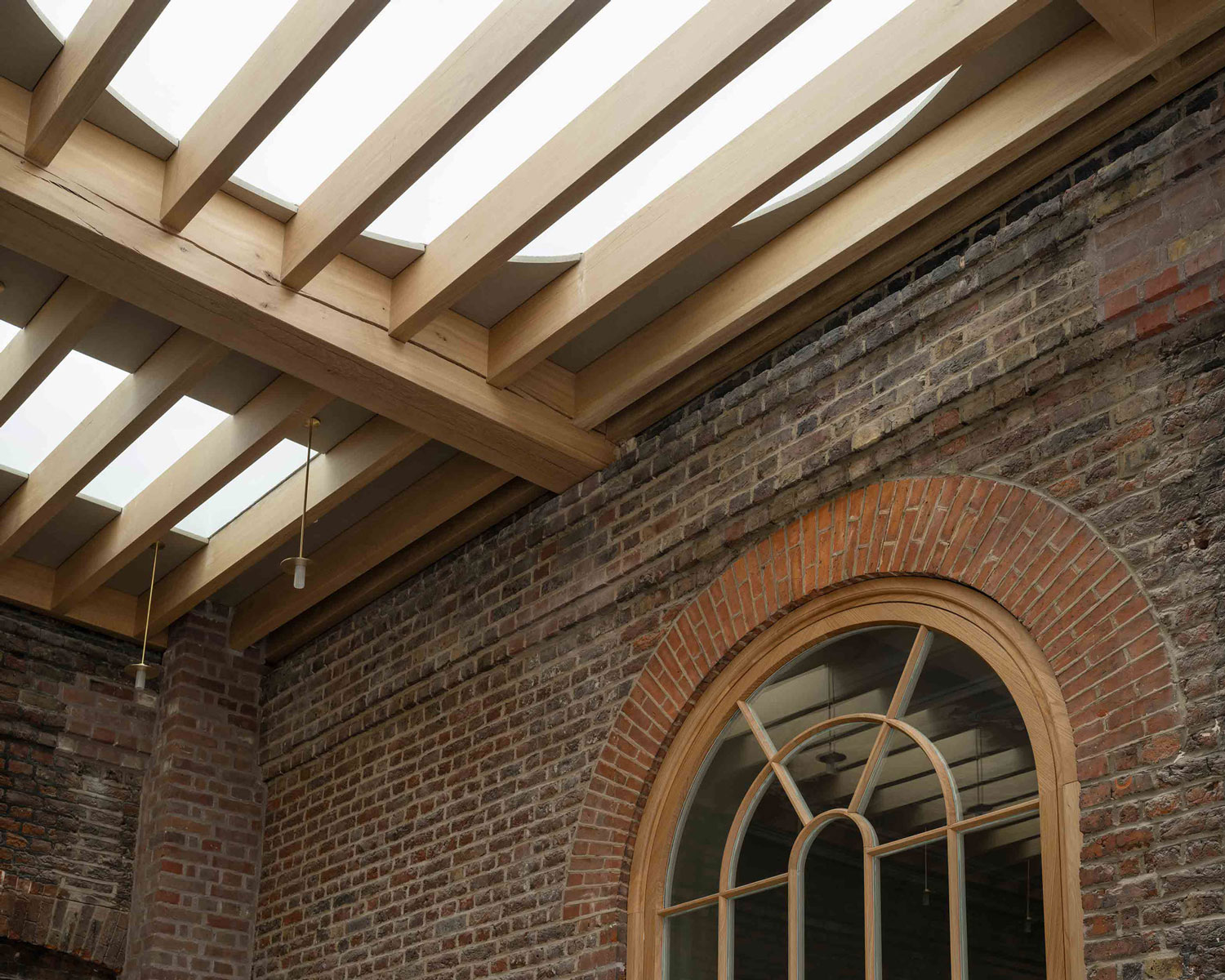
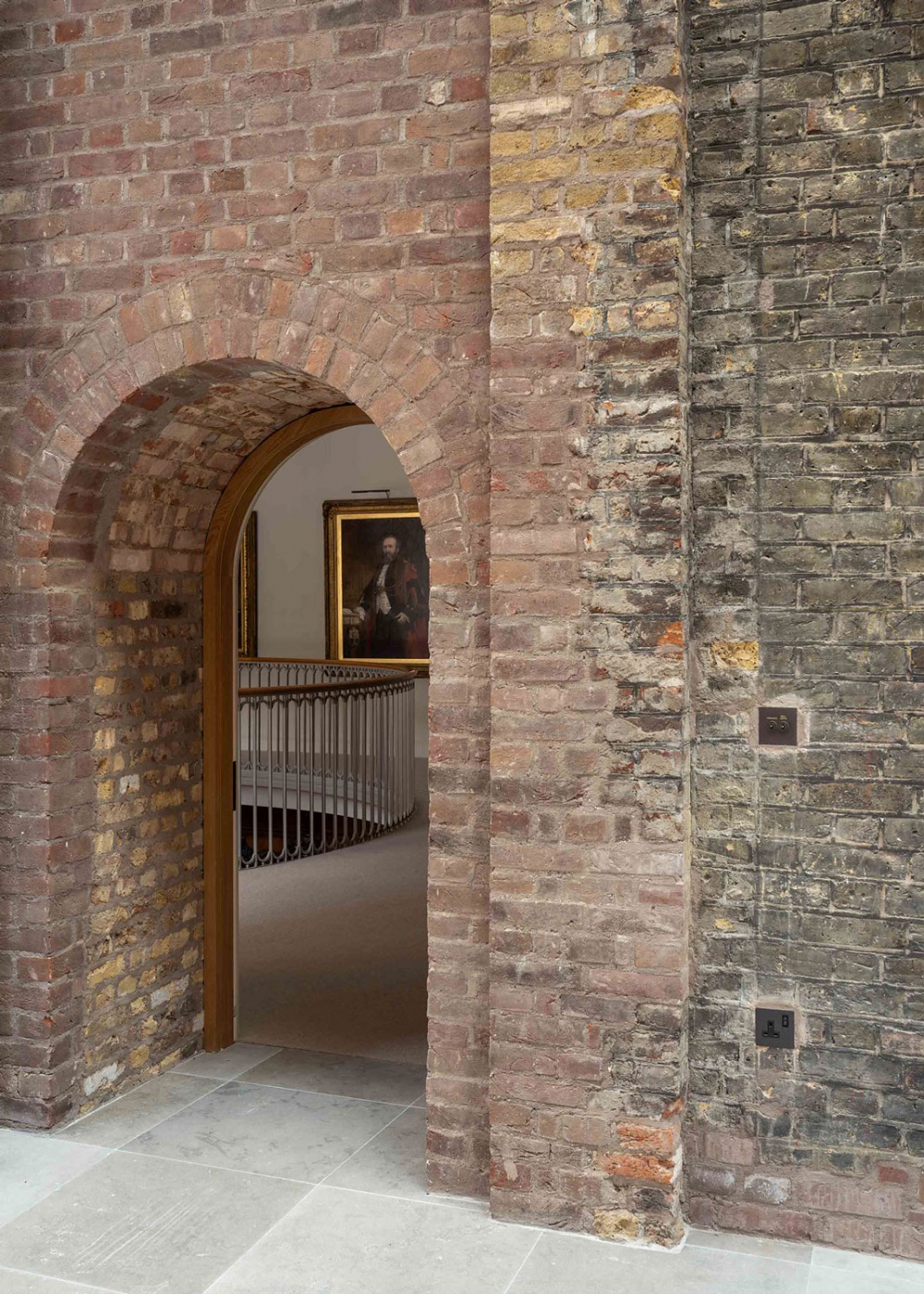
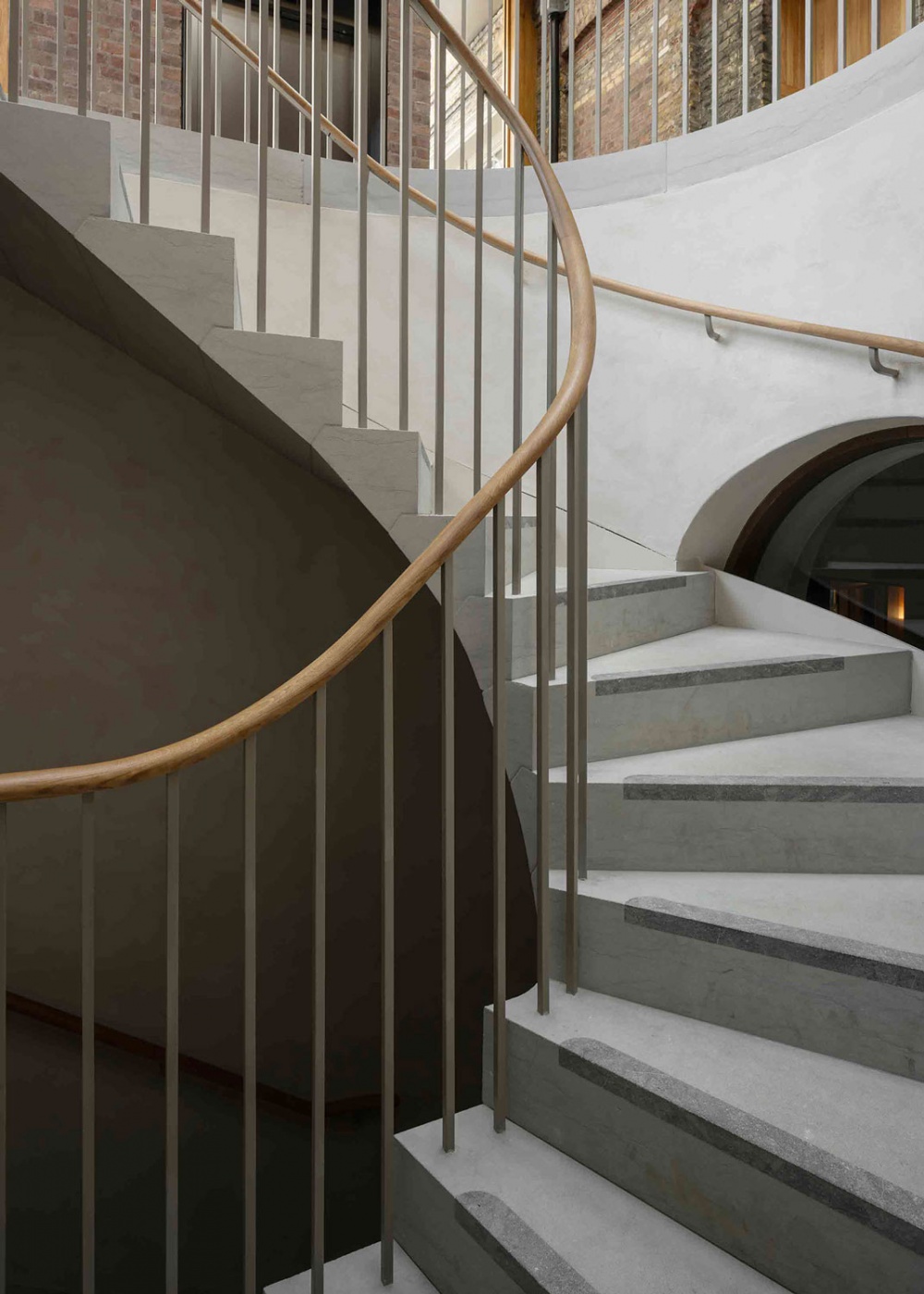
This comprehensive project continues 6a architects’ twenty-five years of adapting heritage buildings for contemporary uses. Contemporary architecture must now embrace the discipline, patience, and craft of conservation. Skinners’ Hall demonstrates how the reuse and repair of heritage fabric can be not only low‑carbon, but also culturally and spatially generative: enabling new public engagement, new forms of occupation, and a renewed sense of continuity in one of London’s most historically-significant buildings.
Heritage consultant
Nick Tyson, The Regency Townhouse
Interior Designer
Carter Owers
Structural engineer
Price & Myers
M&E consultant
Ritchie+Daffin
Quantity surveyor and Project manager
Synergy
The renovation has been utterly transformational, a remarkably difficult act to pull off in such a sensitive location … a scheduled monument, and an exceptional building recognised by the government as being nationally important. Any works … have to be entirely necessary, thoroughly researched, and carried out to the very highest standards of craftsmanship. The presentation throughout is exceptional, with remarkable attention to detail. The high-profile rooms are beautifully presented … a building fit for the 21st century.
Historic England
This project is a masterclass in how to decarbonise and revitalise a heritage building, drawing on its history neither as showy pastiche nor exaggerated palimpsest. There’s a sureness of touch in its calm, quiet interventions, using materials wisely and sparingly ...
The Architects' Journal, February 2026
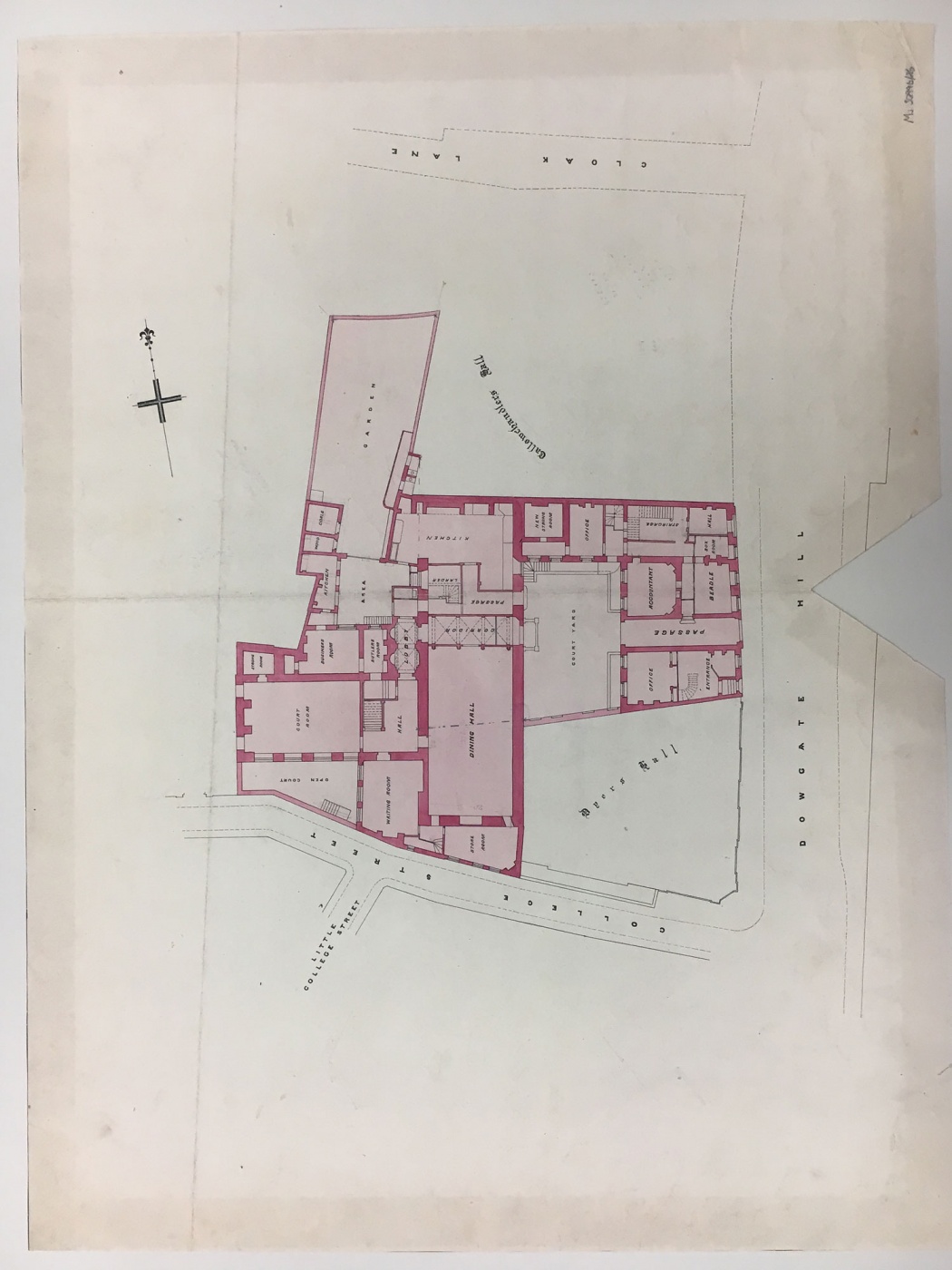
Short History of Skinner's Hall
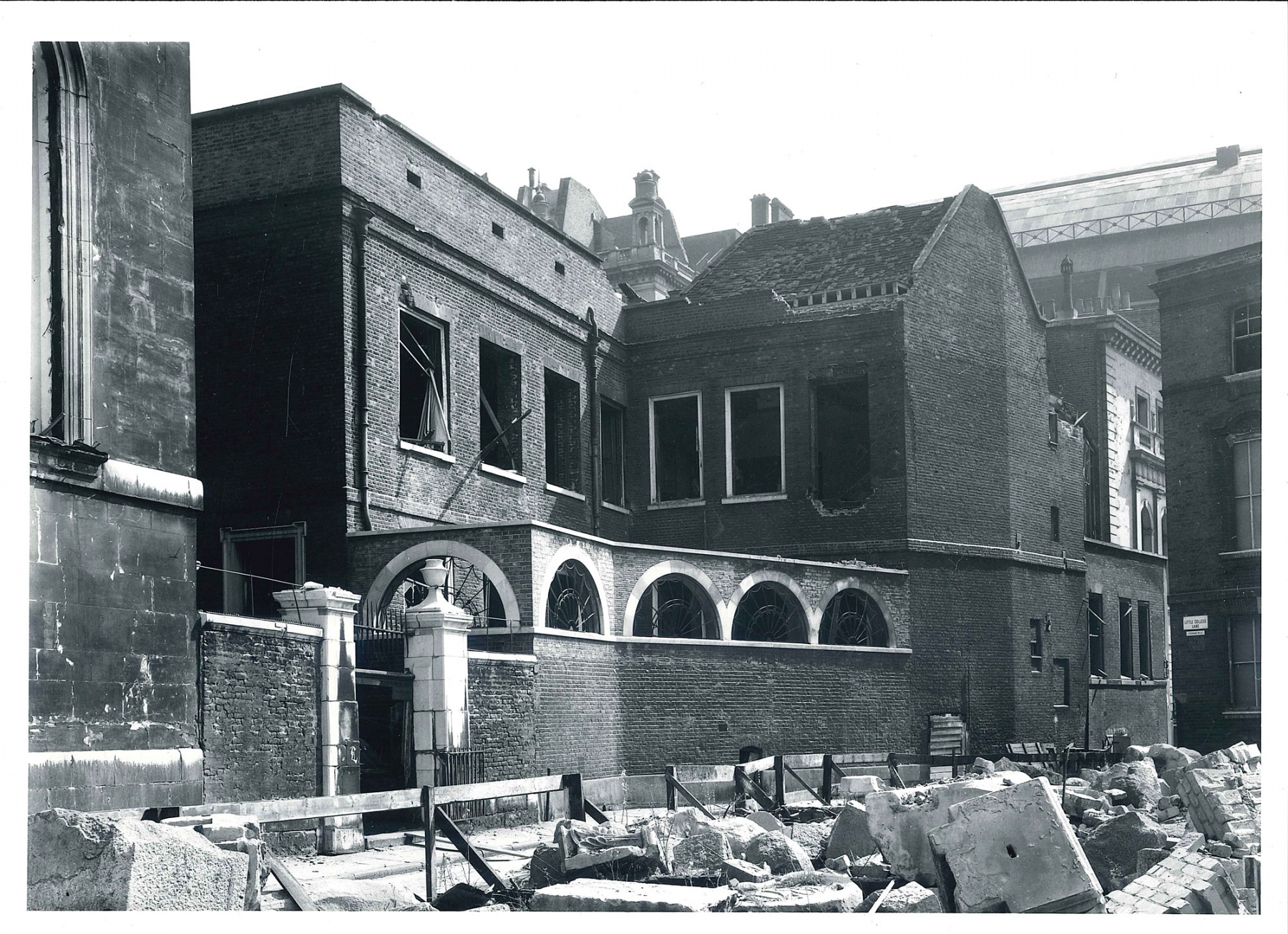
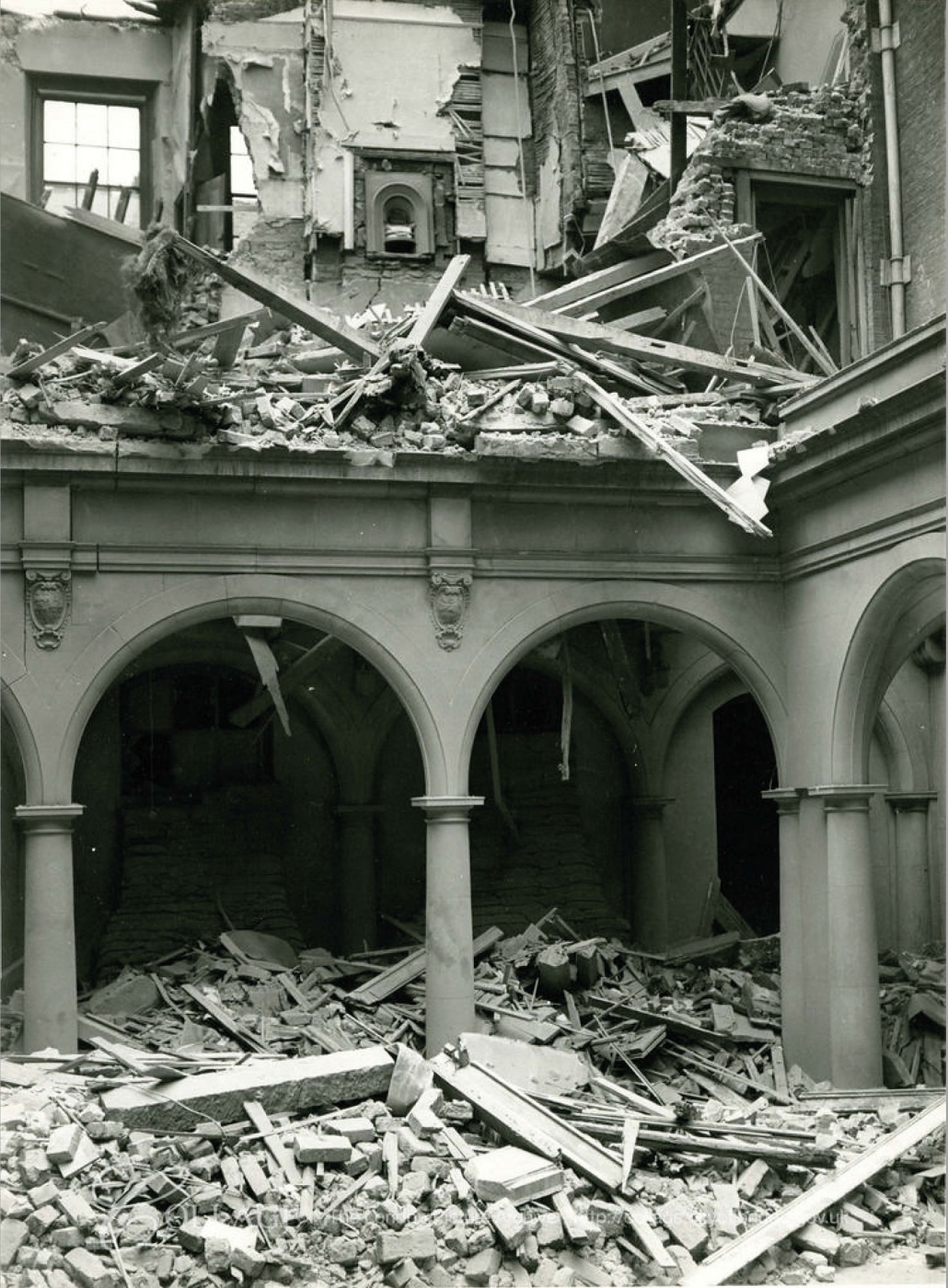
One of the Great Twelve Livery Companies, the Worshipful Company of Skinners has resided in the heart of the City of London since obtaining its Royal Charter in 1327. Re-construction of the company’s hall began in the immediate aftermath of the Great Fire of 1666, with significant interventions during the 18th, 19th and early 20th Centuries. It suffered extensive wartime damage, the impact of which was compounded by pre-war deathwatch beetle attack. The Hall received Scheduled Monument status in 1952 as a fine example of a 17th Century livery hall containing the remains of the earlier medieval hall and Roman constructions alongside the banks of the ancient river Walbrook.
Significant building campaigns were completed by:
John Oliver (1668-78)
Joseph Lem (1678-9)
George Dance the Elder (1737-40)
Richard Jupp Jnr (1773-1782)
William Jupp Jnr (1799-1824)
George Moore (1824-50)
Charles Barry (1870s)
E.H. Burnell and J.D. Crace (1890s)
W Campbell Jones (1891- 1915)
6a architects (2017-24)
Great Hall murals by Frank Brangwyn (1902-30)